COURSE CLOSED
Safeguarding Children from Abuse: Fulfilling our Islamic Responsibility
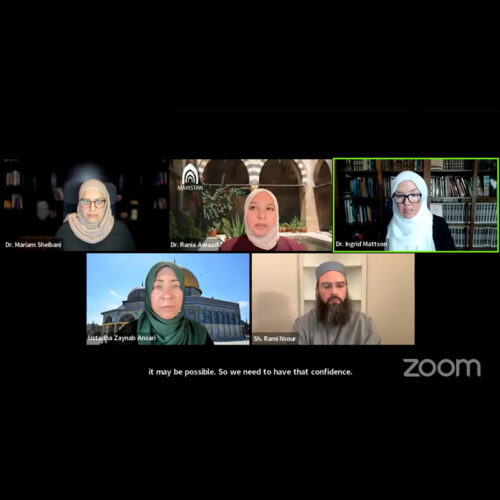
Explore actionable strategies for fostering safer environments in homes, communities, and institutions, drawing on practical insights from Angelica Lindsey-Ali, Sameera Qureshi, and Dr. Mariam Sheibani.
The course is now available on-demand, allowing you to access it anytime, anywhere.
1 in 10 children, or 7–12% of children, are sexually abused before the age of 18.
Course Features
This course is available on-demand, giving you the flexibility to learn whenever it suits you.
✓ Explore the course content at your own pace.
✓ Access all course materials, including videos, worksheetsm and resources are included and yours to keep
✓ Download resources and readings for reference
Explore Safeguarding Children from Abuse: Fulfilling our Islamic Responsibility
Course Description
It is estimated that 1 in 10 children, or 7-12% of children are sexually abused before the age of 18, with more victims among girls (1 in 4, or 1 in 7) than boys (1 in 20, or 1 in 25). There is every reason to believe that our community reflects this national statistic, but we await studies of sexual violence in the Muslim community to help us better understand the dynamics of child abuse in Muslim families and institutions.
Islamically-informed sexual health education plays a crucial role in safeguarding children from abuse. Through clear, age-appropriate guidance, we can teach children and families about boundaries, bodily autonomy, and recognizing inappropriate behavior, all framed within an Islamic context that emphasizes the sanctity and dignity of each person. Such education not only empowers individuals with knowledge but also fosters a community-wide culture of safeguarding and prevention.
By combining expert-driven safeguarding practices with our commitment to Islamic principles, we strengthen our collective responsibility to protect the vulnerable and promote a healthy, safe, and compassionate environment.
Overview
In this course, you will:
- Understand the forms, causes, and dynamics around child abuse in the Muslim community.
- Respond to religious misconceptions that hinder effective prevention and response to child abuse.
- Prevent and address abuse by applying an Islamic and evidence-based framework that balances values of accountability, compassion, and justice.
- Implement best practices, safety education, and protective strategies to protect children from abuse in your family and community spaces.
- How we can move toward more effective and spiritually aligned prevention strategies that prioritize the safety and dignity of all.
- The ethical and religious dimensions of abuse and community accountability.
- The limits of religious scholarly authority in addressing sexual and spiritual abuse.
- Ways to integrate expert-led safeguarding practices and Islamically-informed sexual health education into community life.
Course Outline
Session 1 : Understanding Abuse — How and Why?
Identify the different forms of abuse that can affect children — including emotional, physical, spiritual, financial, and sexual abuse — and dispel common myths using evidence-based facts and statistics, particularly regarding child sexual abuse.
Session 2 : Preventing Abuse
Explore Islamic principles of haya, modesty, and amanah in the context of child protection, clarifying how misuse of these values — along with cultural myths — can prevent proactive education and safety.
Session 3 : Responding to Abuse
Explore Islamic principles of justice, accountability, and sin concealment in the context of abuse, including how religious concepts such as forgiveness, privacy, and trust are often misapplied in ways that silence victims and protect perpetrators.
Session 4 : Implementation / Next Steps
Apply the course material in both home and community settings by assessing your child’s needs, engaging in body safety education, and using tools such as conversation starters and role-play to build confidence and clarity.
Dr. Sheibani's Resources on Safeguarding Children from Abuse

Frequently Asked Questions
Is the course open to everyone?
Yes, the course is open to all. Both men and women are welcome.
Will recordings be available?
Yes, recordings are available to registered participants within 24 hours of the live session.
Students will have lifetime access to all recordings and course materials.
What texts are used as a basis for the course?
To prepare this course, Dr. Sheibani combines insights drawn from diverse hadith sciences and commentaries, academic and historical studies, and over 20 years of study of hadith with leading scholars in the field.
What is the expected commitment for the course?
Creating a community for collaborative learning and reflection is a core principle of Dr. Mariam’s work. Expectations for this course entail:
- Attendance of the live weekly session is the core commitment. While we anticipate that participants may have challenges attending live from time to time, we strongly encourage live attendance of the sessions. Recordings will be made available for those unable to attend live.
- Engagement: Participants will be asked to fill out pre- and post-course questionnaires in which they can pose their questions before the course and evaluate their learning after the course.
- Active participation in the live session is encouraged (but not required). We recognize that while some course participants learn best through discussion, exchange in community, and engaging with the instructor, others participants prefer to simply absorb the content. The course is structured in a way to support both learning styles.
Are there any resources provided for the course?
The course will include five engaging live sessions and a workbook with reflective learning activities. Participants will also have access to the course recordings and session slides.
Prior to the course, students are encouraged to explore the recommended videos and articles shared under “Pre Course Preparation” in the course portal.
I'd like to take the course but I can't afford the tuition. Do you provide scholarships?
Participants unable to afford the course tuition are encouraged to apply for our limited number of scholarships. The application closes on August 16, 2025, after which scholarship applications will not be accepted. All applicants will be notified by August 20, 2025.
We encourage applicants to apply only when there is a cause or reason that, without a sponsorship-supported placement, would mean they are not able to attend the course or if allocating their resources to finance the course would result in a loss of essential resources. No participants will be turned away for lack of funds.