The Theology of Supplication: Exploring Dua as Spiritual Devotion
Join Dr. Sheibani’s self-paced course exploring our relationship with dua and renewing intimate invocation as a grounding spiritual practice in our lives.
We know from our religious teachings that dua is at the very heart of our devotional lives. We also know this experientially: in many ways, dua is an indicator, a litmus test, of our spiritual state and inward alignment.
Course Features
Course Description
Our course will begin with an exploration of our personal and collective relationship with dua. We’ll learn key theological principles that shape the place of supplication in our devotional lives as believers.
We’ll then look at diverse perspectives on the best practices or the “dos and don’ts” of dua, then end our journey by discussing how dua connects us with others in both the seen and unseen realms.
Alongside the prerecorded modules, in your workbook you’ll be invited to reflect on how the lessons apply to your life and to contemplate ways you can integrate them into a renewed relationship with dua.
Module 1: Exploring our Relationship to Dua & Its Theological Foundations
We’ll then learn key theological principles that shape how we engage in the devotion of invocation as believers to take the first steps towards renewing and deepening our relationship with Allah through dua.
Some of the questions we’ll explore:
• What is the meaning, purpose, and role of dua in a Muslim’s devotional life?
• What does the “acceptance” or “answering” of dua mean?
• Can a dua go unanswered or be rejected?
• Does dua change Allah’s decree (qadaʾ wa-qadar)?
Module 2: Approaching Dua Inwardly and Outwardly
Our second module will look at diverse perspectives on the best practices – the “dos and don’ts” of dua.
We’ll discuss the inward and outward art of invocation through exploring select duas from the Prophets and the ummah’s cumulative contemplation and practice of invocation.
Some of the questions we’ll explore:
• Is there a single “formula” for an accepted dua? If so, where does it come from?
• What inward and outward etiquettes of dua did the Prophet Muhammad ﷺ teach us?
• What does it mean for certain times and places to be considered optimum for duas to be answered?
• What does it mean for a dua to be general or specific and what are the implications of each? Is it better to ask or not to ask for something?
Module 3 : Dua Bridging Realms? Life/Death, Seen/Unseen, Time/Space
While we’re each invited to determine the implications of these potential connections to the unseen for our personal practice, exploring the basis of these practices and what they tell us about realities beyond the material realm is paradigm-shifting in itself.
Some of the theological and legal questions we’ll examine:
• Do our prayers reach the dead? Do their prayers reach us? What about the Prophet ﷺ?
• Do some people’s dua count more than that of others? What are the implications of Islamic teachings on this issue?
• What are the Islamic teachings about supplicating through means and acts beloved to Allah (tawassul)?
• Can we pray for non-Muslims before and after their death?
In this course, you will
Understand the core theological principles underlying the devotion of dua.
Reflect on your relationship with dua and explore mental and spiritual roadblocks obstructing your devotion of dua.
Deepen your relationship with Allah through learning and implementing the inward and outward Sunnas of dua
Gain clarity about the spectrum of Islamic perspectives on debates and questions circulating about dua among Muslims.
Apply the principles you learn about the features, expressions, and formulations of Prophetic duas to renew your practice of dua.
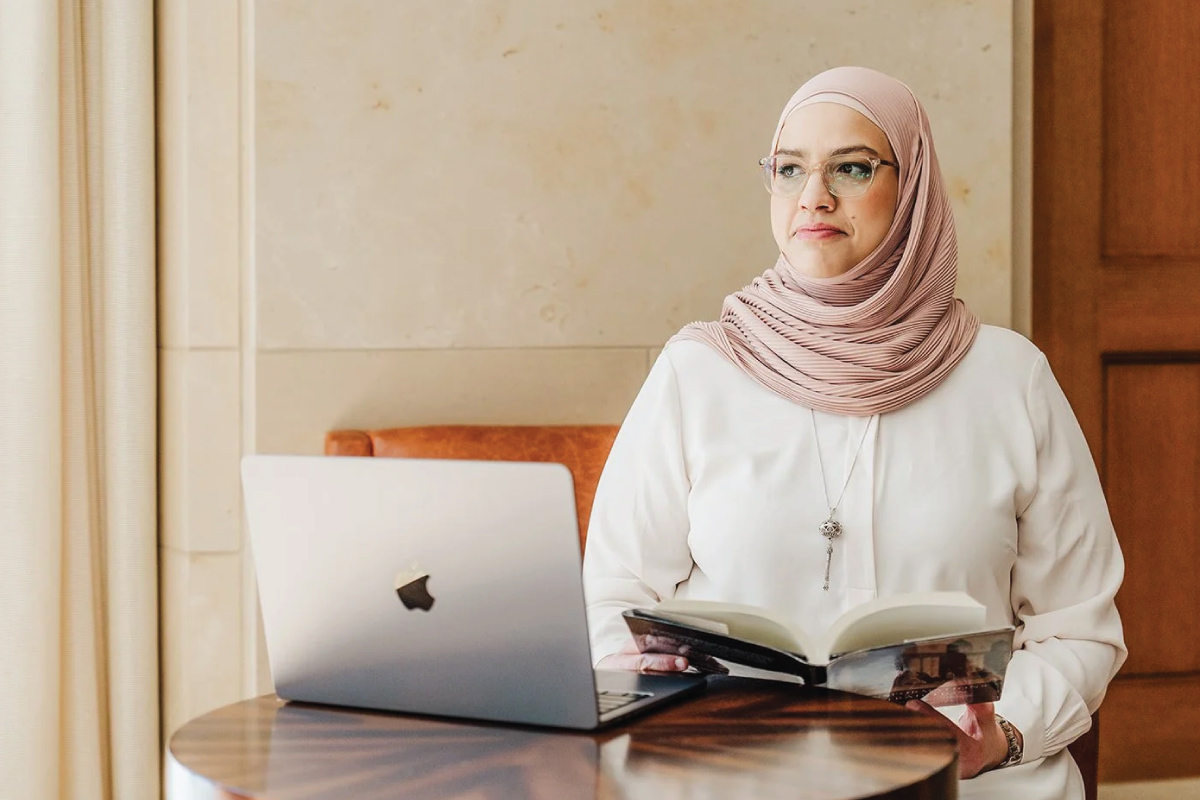
Dr. Mariam Sheibani
Dr. Mariam Sheibani is a globally recognized scholar, educator, and researcher. She is the Founder and Director of Maʿruf Commons, a research and education organization that offers programs and resources for Muslim communities to advance intentional learning, spiritual formation, and ethical practice.
She is an Assistant Professor of Islamic Thought at Brandeis University. Dr. Sheibani holds a PhD in Islamic Thought from the University of Chicago and completed her postdoctoral training at Harvard Law School. Over the past two decades, she has studied classical religious sciences with Muslim scholars from Turkey, Syria, Jordan, North America, and West Africa. Dr. Sheibani’s work offers paradigms and frameworks for coherently integrating religious commitment with lived experience. She empowers people to think through critical issues, co-construct solutions to shared challenges, and develop practical tools for cultivating a God-centered, meaningful spiritual life. Learn more here.
Frequently Asked Questions
Is the course open to everyone?
Yes, the course is open to all. Both men and women are welcome.
Where was this course recorded?
This course was recorded at a retreat in Turkey’s Black Sea region in 2024. The audience was composed of both men and women from all over the world.
What texts are used as a basis for the course?
For this course, Dr. Sheibani uses a variety of exegeses (tafsir) of the Quran, hadith commentaries, theological writings, and other spiritual works. These texts include Zabidī’s commentary on Book IX of al-Ghazali’s Revival of the Religious Sciences, Shaykh Zakariyya al-Ansari’s Talkhis al-azhiya fi ahkam al-ad’iyya, and commentaries on Ibn ʿAtaʾillah’s Aphorisms (hikam).
What is the expected commitment for the course?
The core course material will take you about 6 hours to complete. The pre-recorded lectures span 5 hours of content divided across three modules composed of 20-to-30-minute videos.
Before and after listening to the lectures, consolidate your learning by spending time on the reflective and application exercises in the accompanying workbook. You can also use the workbook to jot down notes while listening to the videos.
As you make your way through the material, submit any questions you have in the question form. These will be reviewed by Dr. Sheibani and answered in the period discussion sessions she will hold. The next live session is scheduled for April 2025.
Finally, for further enrichment, you can consult the recommended readings posted as PDFs.